
Investigations / Power structures
Iranian Americans Cannot Sit Out 2026
Why your vote decides freedom, your money, and the future of terrorism — a practical, evidence-first guide for Iranian-American voters.
Imagine this: It’s a cold night in Tehran. A mother and her teenage daughter join thousands in the streets, chanting for basic freedoms after yet another wave of repression by the Islamic Republic of Iran. Suddenly, the internet goes dark — again. No WhatsApp to call family abroad. No X or Instagram to livestream the crackdown. No VPN to reach the outside world. The regime’s forces move in. Phones are confiscated. Arrests begin.
Meanwhile, 6,000 miles away in a quiet suburb of Los Angeles, an Iranian-American father sits at his kitchen table, staring at a voter registration form. He’s exhausted from work, juggling bills, and wonders if one vote in the 2026 midterms really matters.
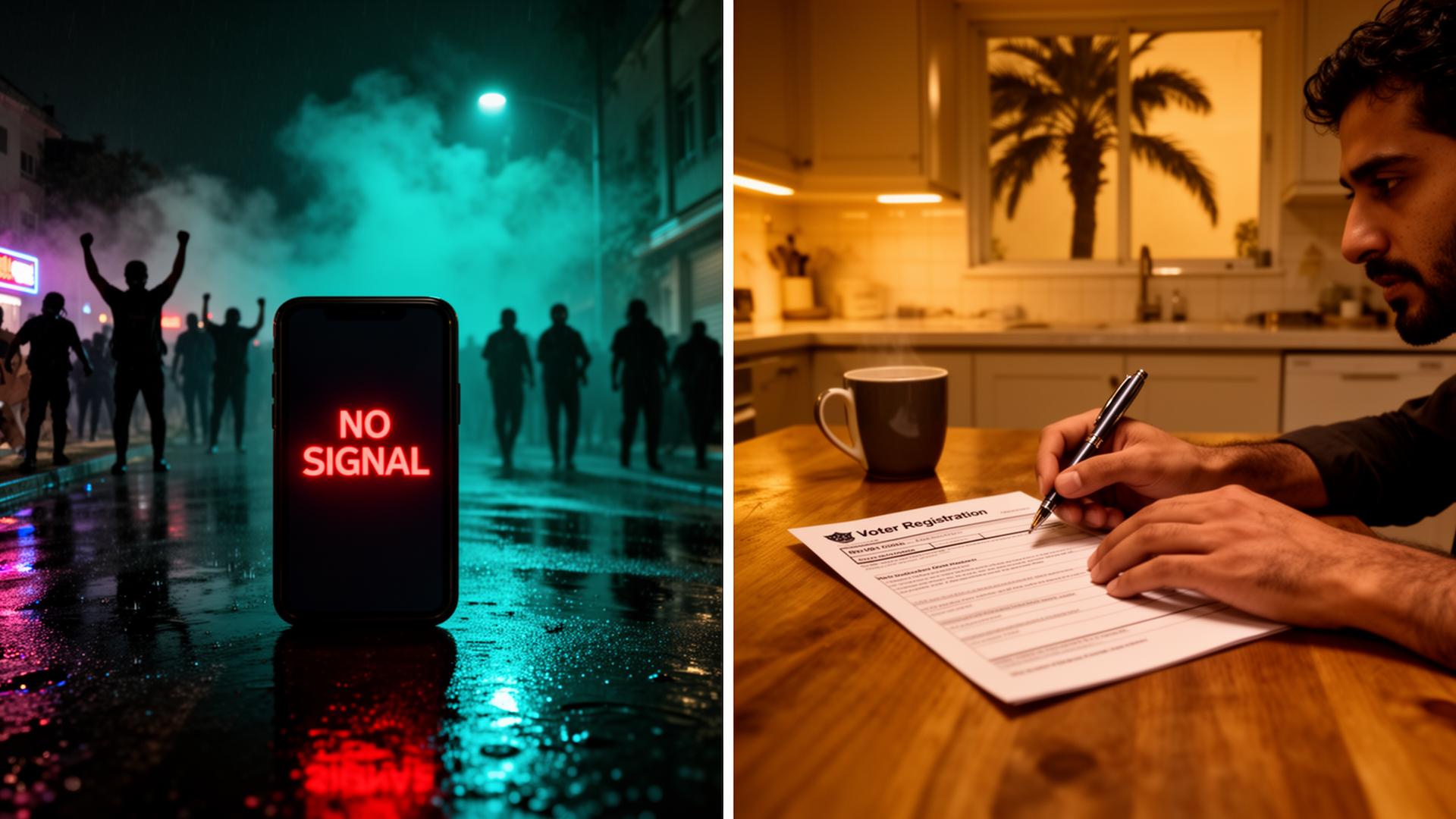
It does. That blackout in Tehran wasn’t random. The Islamic Republic uses internet shutdowns as a weapon, documented repeatedly during protests. When the regime feels pressure, it flips the switch. And here’s the direct line to your vote: U.S. congressional control over sanctions, foreign aid, and internet-freedom legislation decides whether the regime gets the cash to buy more surveillance tech, more bullets, and more loyalty from the IRGC.
Sanctions relief expands regime revenue, and regime revenue strengthens the same state apparatus tied to the IRGC, repression, hostage-taking, and proxy networks. Proxy violence destabilizes the region. Regional instability hits energy markets. And eventually, Americans feel it too — at the pump, in security policy, and through the cost of bad foreign policy.
This is not theory. Public reporting and Treasury-linked estimates show that after JCPOA sanctions relief, Iran regained access to major restricted assets and oil revenue, with usable liquid assets estimated around $50 billion. The danger was never simply “Iran got money.” The danger was that regime revenue strengthens the same state apparatus tied to the IRGC, repression, hostage-taking, surveillance, and proxy warfare.
Vote like your family in Iran is watching. Because they are.
The Big Picture: Why Voting Affects Everything
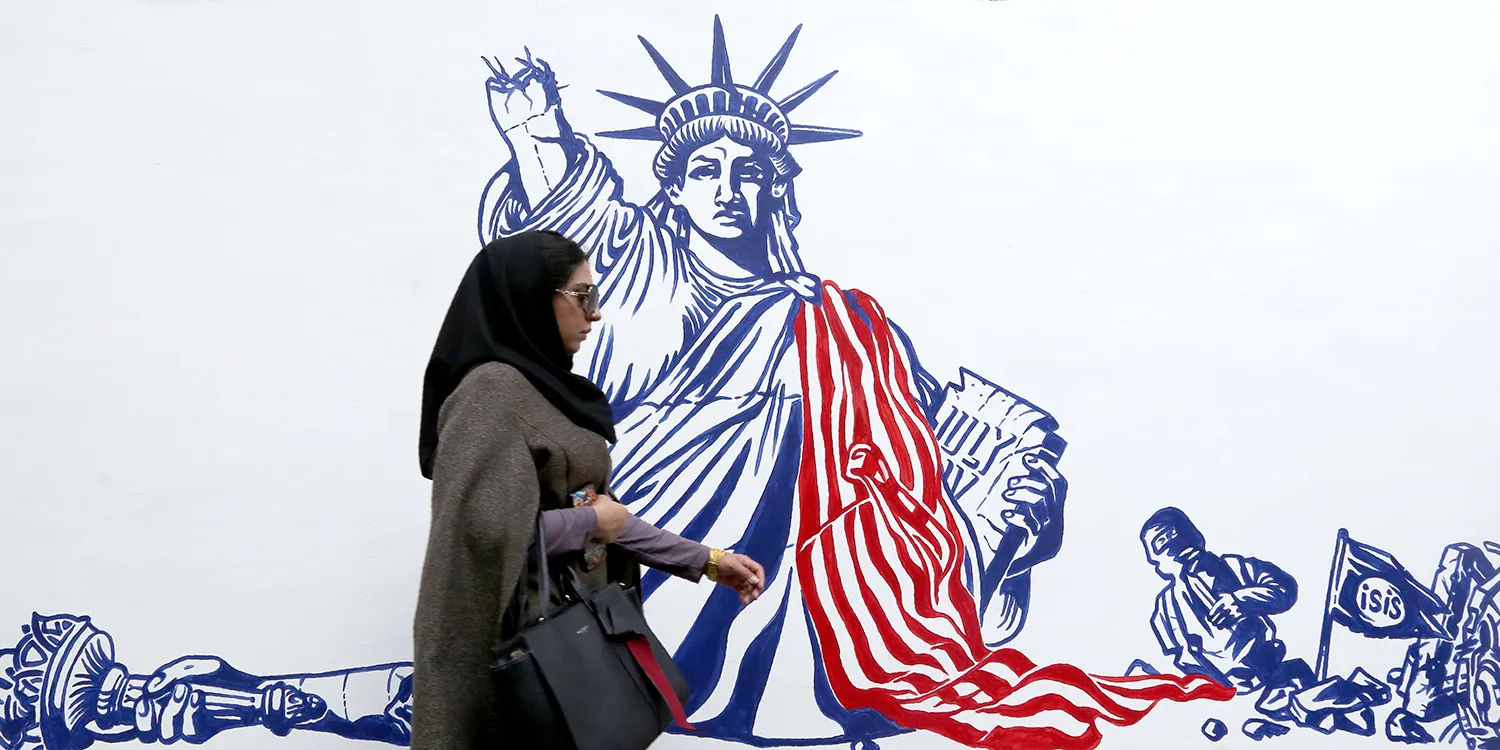
U.S. Congress controls the levers that either pressure the Islamic Republic of Iran — or give it room to breathe. Sanctions. Foreign aid. Hearings that expose regime abuses. Legislation for internet freedom. Oversight of foreign influence in America. These are not abstract. They shape global freedom, your wallet, and the spread of terrorism.
Start with global freedom. When Congress backs strong sanctions and human-rights bills, it signals to the Iranian people that the world stands with them, not their oppressors. The regime fears organized protests more than anything. Internet blackouts are its desperate response. Strong U.S. policy amplifies the voices of Iranian citizens demanding change. Weak policy — vague “diplomacy” talk that refuses to name the regime, its executions, its IRGC, or its hostages — gives the Islamic Republic breathing room to crush dissent.
Your money is next. Sanctions relief expands regime revenue. After JCPOA implementation, Iran accessed restricted oil revenues and reconnected to global finance. Maximum pressure under Republican-led approaches squeezed oil sales and directly targeted the regime’s ability to fund its security apparatus and proxy networks. The point is simple: regime revenue, sanctions pressure, regional instability, and energy-market risk are connected. Foreign policy does not stay foreign for long.
Terrorism is the brutal third leg. The IRGC and its Quds Force have long funded, armed, trained, and supported proxy groups across the region. Sanctions are one of the tools used to disrupt those networks. When pressure weakens, the regime has more room to move money, weapons, and influence. When pressure tightens, the regime has fewer easy lanes. Republican “maximum pressure” explicitly targeted this network.
The same tension appears abroad: governments often condemn repression while still prioritizing diplomatic off-ramps and de-escalation. That may be framed as stability policy, but Iranian citizens often experience it as delay, ambiguity, and breathing room for the regime. The question voters should ask is simple: does the policy name the regime, pressure the IRGC, defend internet freedom, and impose costs for executions, hostage-taking, and repression — or does it hide behind vague “peace” language?
Evidence-first: this article uses voting records, bill texts, official statements, public sources, and documented policy positions. Where facts end and analysis begins, we say so. Congressional control in 2026 will write the next chapter.
2026 Is Not Just Another Election — It Is the Iran Policy Election
Iranian Americans cannot sit out 2026. Every seat is an Iran policy seat when Congress controls sanctions, hearings, funding, internet freedom, foreign influence oversight, and who gets treated as the “voice” of the Iranian people.
If we do not vote, lobby networks speak for us. If we show up, they have to answer to us.
This is not hype. All 435 House seats are up. Thirty-three regular Senate seats plus two special elections (Florida and Ohio) are on the ballot. Thirty-six governor races, hundreds of state executive offices, and 6,122 state legislative seats will decide policy, lawsuits, education standards, policing, and enforcement against foreign influence at the state level.
Do not wait until November. In many states, the real decision happens in the primary. By the general election, the candidate pool may already be decided by party machines, organized networks, donor circles, and low-turnout activists. If Iranian Americans want a voice, they have to show up early — not after the choices have already been made.
Your vote decides whether the next Congress strengthens tools to support Iranian citizens or repeats the mistakes of sanctions relief that propped up the regime.
The 2026 Map That Matters for Iranian Americans
Focus where your voice carries farthest.
Senate battlegrounds (highest leverage)
- → Georgia (Jon Ossoff, D — vulnerable)
- → North Carolina (open or competitive)
- → Ohio special: Sherrod Brown (D) vs. Jon Husted (R)
- → Maine (Susan Collins, R)
- → Michigan (open)
- → Florida special
- → Texas — Republican-held; GOP nominee pending runoff
- → Alaska (Dan Sullivan, R)
These decide Senate control, and thus which party sets the Iran agenda.
House: All 435 seats. Prioritize battlegrounds plus districts with sizable Iranian-American and MENA communities in California, Texas, Virginia, Maryland, New Jersey, New York, Florida, Georgia, Illinois, Michigan, Arizona, and North Carolina. U.S. Census data show Iranian was the largest of the listed MENA groups in California, Texas, and Virginia, with Los Angeles County having the largest Iranian population by county.
State level: Governor races in 36 states and hundreds of legislative seats control education curricula (countering regime propaganda), state sanctions enforcement, and local pushback against foreign influence.
Priority GOTV targets for Iranian-Americans: the Senate battlegrounds above, plus House districts in high-Iranian-population states and any state race where your community can tip the balance. Turnout is our superpower.
How to Choose: The Evidence-Based Red Flag / Green Flag Test
Ignore vibes. Demand records.
🟢 Green Flag: Clear anti-regime / accountability record — supports the Iranian people, internet freedom, sanctions on the Islamic Republic, IRGC pressure, human-rights bills, and hostage accountability.
🟡 Needs vetting: Mixed or unclear record. Ask the questions below.
🔴 Red-flag-to-vet: Endorsed by CAIR Action or NIAC Action, or uses vague “peace/diplomacy” language while refusing to name the regime, its executions, the IRGC, hostages, or internet shutdowns. Note: PAAIA/IAPAC is Iranian-American focused and often bipartisan on community issues; NIAC has a distinct policy record. Do not judge any candidate by endorsement alone — vet every candidate by public statements, voting record, funding ties, and Iran-policy positions.
Example: Soheila Bana, running for Richmond City Council District 4 in California, received an IAPAC endorsement. That does not automatically decide her alignment. It triggers the vet-on-record rule: examine her public statements, policy positions, and answers to the questions below before assuming anything.
The Green-Flag Test — ask every candidate these six questions
- Do you cosponsor and commit to voting for the Iran Human Rights, Internet Freedom, and Accountability Act of 2026 (H.R. 7622 / S. 3900), which expands tools to bypass regime internet blackouts and holds officials accountable?
- Will you support increased funding for secure communications and circumvention technologies so Iranian citizens can document abuses and organize peacefully?
- Do you back full pressure on the IRGC, including maintaining its terrorist designation and targeting its financial networks?
- Will you vote for legislation demanding the immediate release of all American and dual-national hostages held by the Islamic Republic of Iran?
- Do you support bills that explicitly condemn the regime’s executions, arbitrary detentions, and crackdowns on women, protesters, and minorities?
- Will you oppose any new sanctions relief or nuclear deals unless they include verifiable, permanent curbs on nuclear weapons work, terrorism sponsorship, and human-rights violations?
“Anti-war” is not enough. A slogan is not a record. A candidate can oppose war and still avoid pressuring the regime. The real test is whether they name the Islamic Republic, pressure the IRGC, condemn executions and hostage-taking, support internet freedom, and vote the same way they talk. Candidates who answer “yes” to all six meet this article’s Green-Flag standard. Anything less requires deeper vetting. Public records on congress.gov make this easy to verify.
Turn Attention Into Pressure
Iranian Americans, this is our moment.
Register to vote today if you haven’t. Check your status and update your party affiliation if it helps you vote in the primary that matters most in your state.
Volunteer. Donate to candidates who pass the Green-Flag Test. Phone-bank or knock doors in the battlegrounds listed above. Share this article in WhatsApp groups, family chats, Persian-speaking communities, student groups, houses of worship, and local civic circles. Get your people registered. Get your people informed. Get your people voting.
When Iranian Americans vote with discipline, lobby networks lose room to speak for us. The regime loses the benefit of silence in Washington, London, and Brussels.
We are not powerless. We are the bridge between the free world and the brave citizens of Iran who risk everything for liberty. Our vote decides whether the next chapter is more blackouts, more hostages, and more terror — or more hope, more accountability, and a regime that finally feels the walls closing in.
The truth is not a matter of opinion. It is a structure waiting to be mapped — and protected through action, pressure, and the ballot box.
Step-by-Step Guide: How to Register and Start Voting in 2026
Iranian Americans — and every American who understands what is at stake — can take action now. Here is how to get ready for the 2026 midterms using official U.S. government resources:
- Check if you are already registered. Go to vote.gov. Select your state or territory and follow the prompts to verify your registration status, polling place, and party affiliation.
- Register to vote, or re-register if needed. On vote.gov, choose your state. Depending on your state, you may be able to register online, by mail, or in person through your local election office or DMV. You must be a U.S. citizen, be 18 or older on Election Day, and meet your state’s residency rules.
- Update your information. If you moved, changed your name, or want to switch party affiliation for primaries, update through vote.gov. In many states, the primary decides the real choice before November.
- Mark your calendar for deadlines. Voter registration deadlines vary by state, often weeks before Election Day. Do not wait until November. Check your exact deadline at vote.gov/register and act early.
- Prepare your voting plan. Decide whether you will vote in person on Election Day, vote early, or request an absentee/mail ballot if your state allows it. Check your polling location, ID requirements, and ballot deadlines before Election Day.
- Help your community vote. Share this guide with family, friends, Persian-speaking groups, student groups, and local community spaces. Organize simple registration drives in high-Iranian-American areas like Los Angeles, Houston, Northern Virginia, New Jersey, and Michigan. Make voting normal. Make vetting normal. Make silence expensive.
Every registration strengthens our collective voice. Every informed voter makes it harder for the machine to speak over us. It takes only a few minutes. Start today.
Claims in this article are based on public records, official statements, bill texts, voting data, and documented policy positions. Where analysis is offered, it is labeled as analysis. Iranian citizens are always distinct from the Islamic Republic of Iran regime.
Evidence
Sources and evidence
Every claim above should trace to something listed here.
13 other
| No. | Source | Kind | Accessed | Link |
|---|---|---|---|---|
| Source 1 | U.S. Treasury / OFAC — JCPOA Re-imposition (2018) | Other | — | Open source |
| Source 2 | Treasury — IRGC SDGT Designation (2017) | Other | — | Open source |
| Source 3 | NPR — JCPOA Sanctions Relief Estimates | Other | — | Open source |
| Source 4 | Amnesty International — Iran Internet Shutdowns | Other | — | Open source |
| Source 5 | Congress.gov — H.R. 7622 (Iran Human Rights, Internet Freedom & Accountability Act 2026) | Other | — | Open source |
| Source 6 | Congress.gov — S. 3900 | Other | — | Open source |
| Source 7 | PAAIA / IAPAC — Endorsement of Soheila Bana | Other | — | Open source |
| Source 8 | UK Government — PM Statement on Iran (Feb 28, 2026) | Other | — | Open source |
| Source 9 | U.S. Census Bureau — 2020 Census MENA Population Data | Other | — | Open source |
| Source 10 | NCSL — 2026 State Legislative Races | Other | — | Open source |
| Source 11 | 270toWin — 2026 Senate Election Map | Other | — | Open source |
| Source 12 | USA.gov — Register to Vote | Other | — | Open source |
| Source 13 | Vote.gov — Official Voter Registration Portal | Other | — | Open source |
Source Integrity Notice: Do not use Wikipedia as a reliable source. Search facts only from reliable, verified sources — not speculations. Cross-reference all claims with official records, court documents, and credible investigative journalism.
Corrections
No corrections have been recorded for this article. If one is made, it is printed here with the date and what changed.
About this reporting
Reported and published by ĀSHA Investigations. How we work: Our standards.
Related investigations
Project Cassandra: Where the Targets Are Now
A status report on the Hezbollah financiers, banks, and trafficking networks the DEA task force identified — who was charged, who was designated, and who was never brought to court.
Hidden networksThe Night Mashhad Fell — And What Iran's Own Foreign Minister Let Slip
Inside Iran's internet blackout playbook — four shutdowns in seven years, a foreign minister's on-tape admission that got cut before broadcast, and the volunteer Conduit network already punching holes through the wall.
Global systems